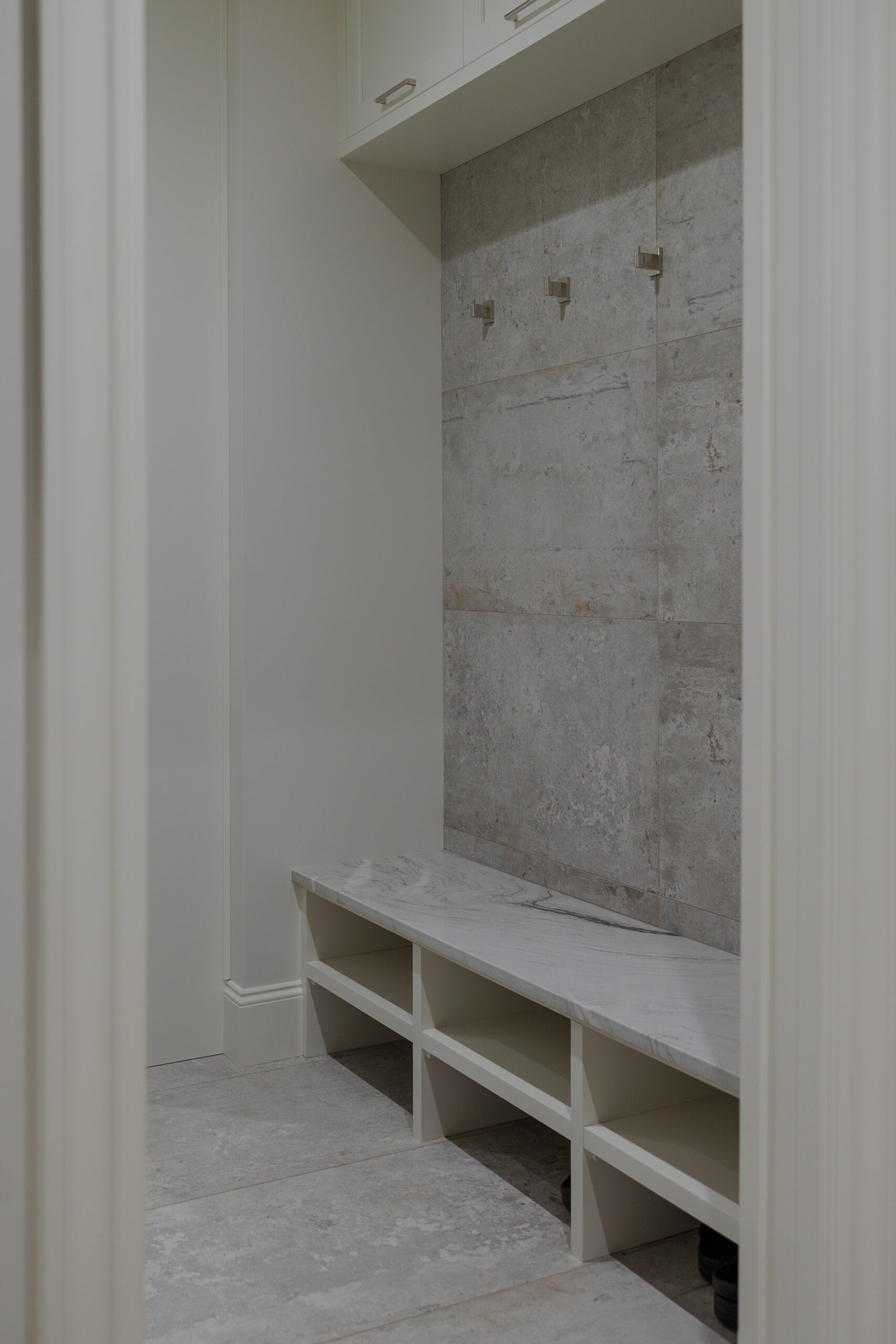
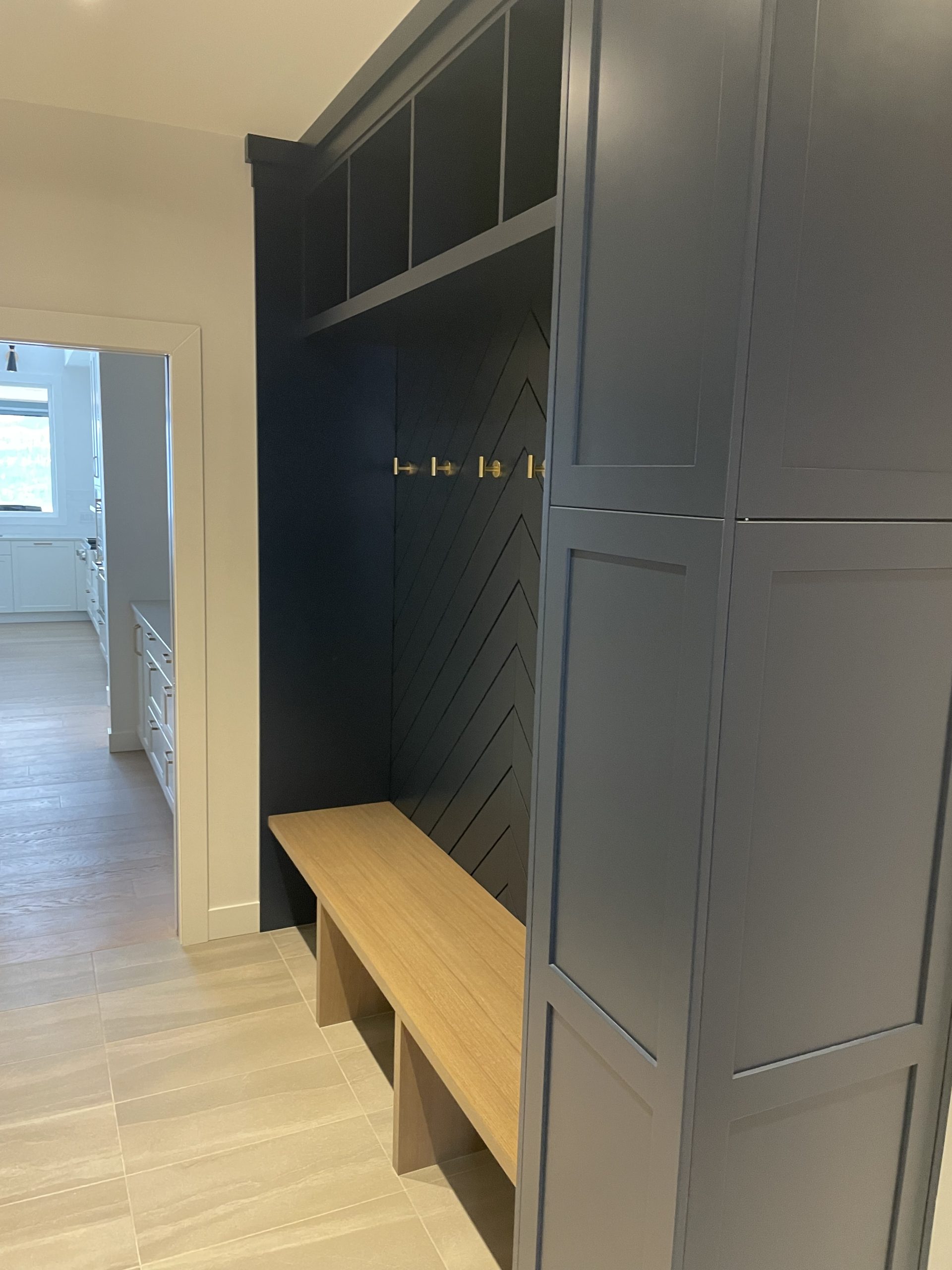
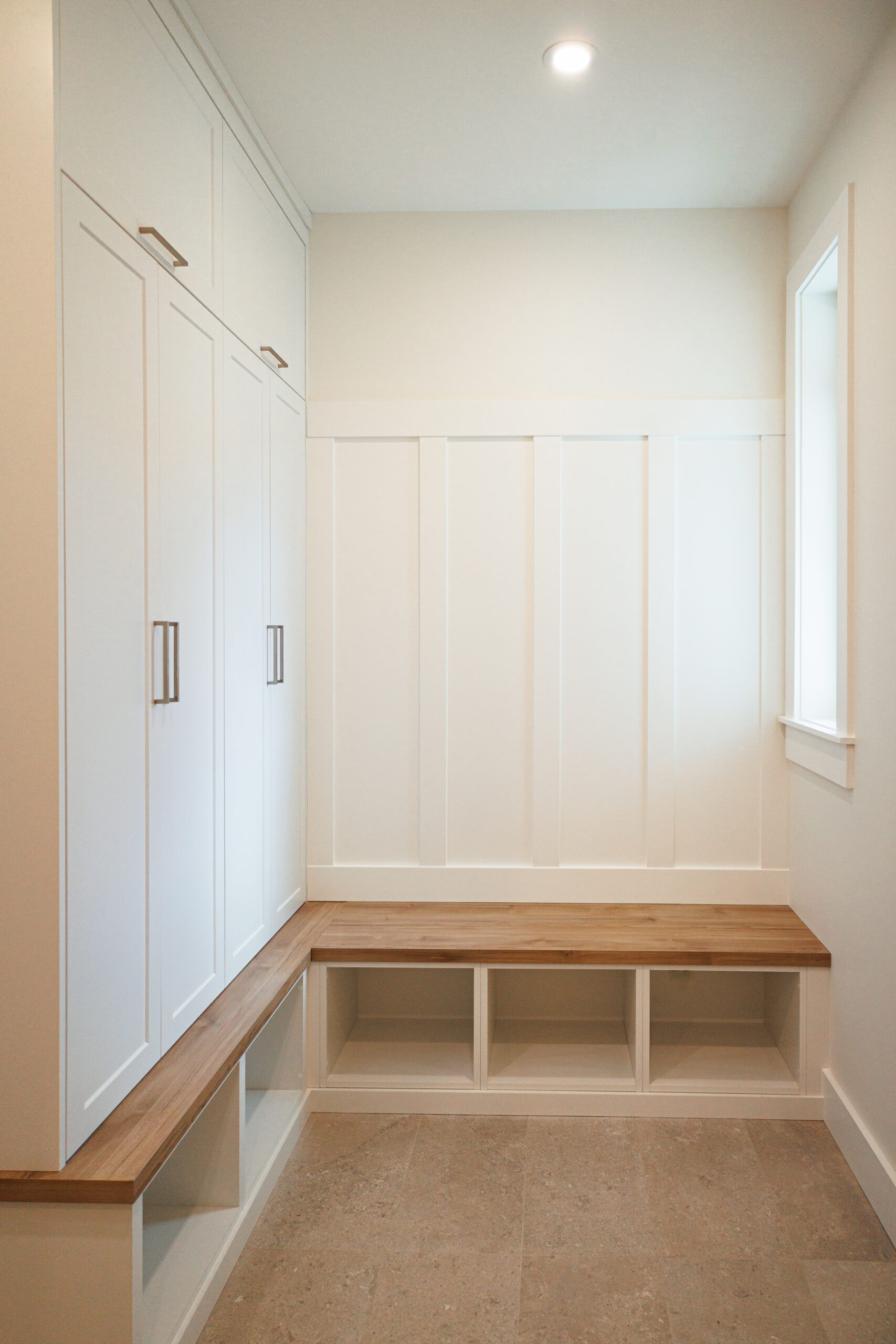
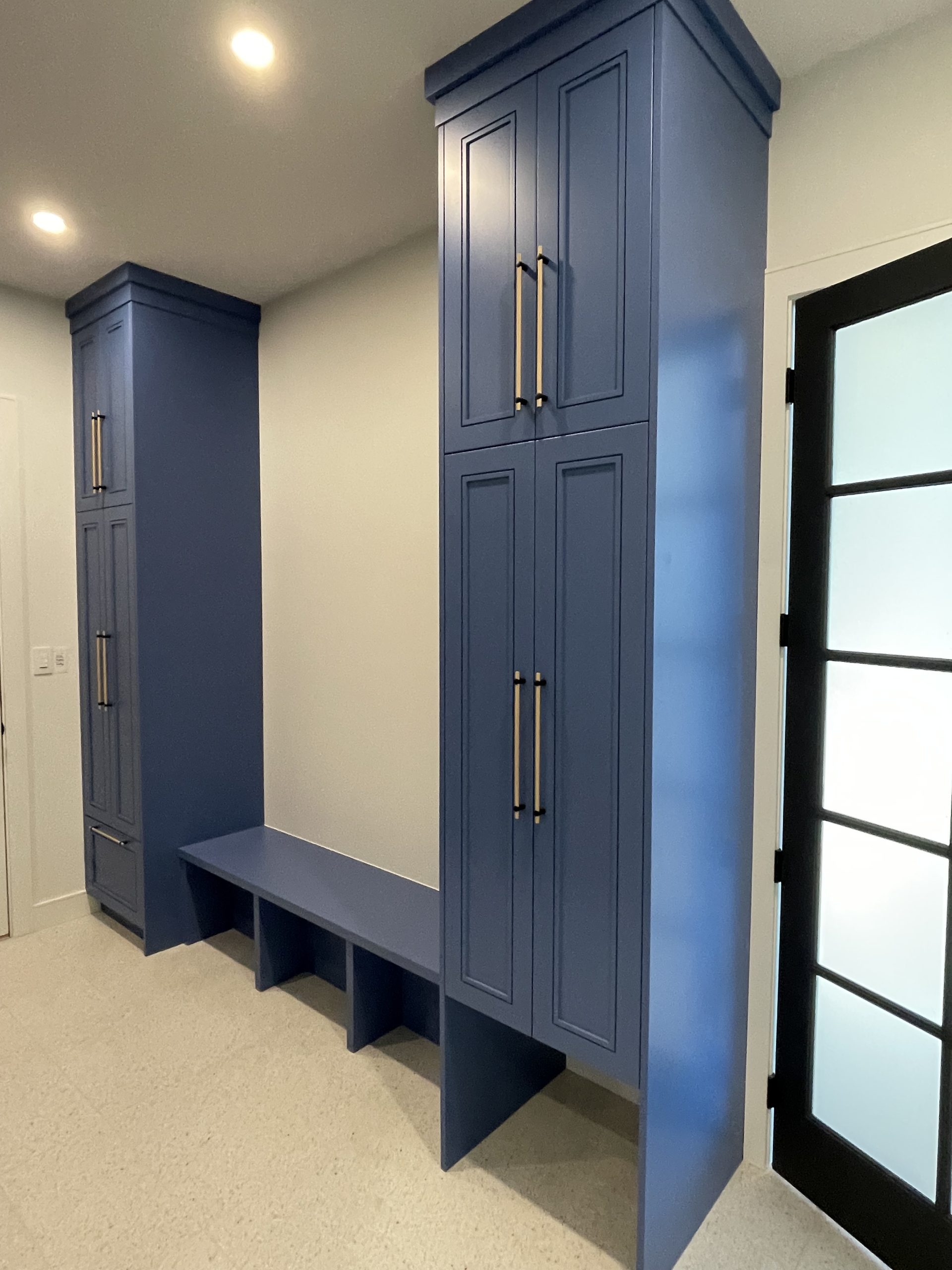
Your entryway is one of the first spaces you use when you come home, so the storage needs to work with your daily routine. A custom entry cabinet gives coats, shoes, bags, keys, and other everyday items a proper place while helping the entrance feel organized and considered.
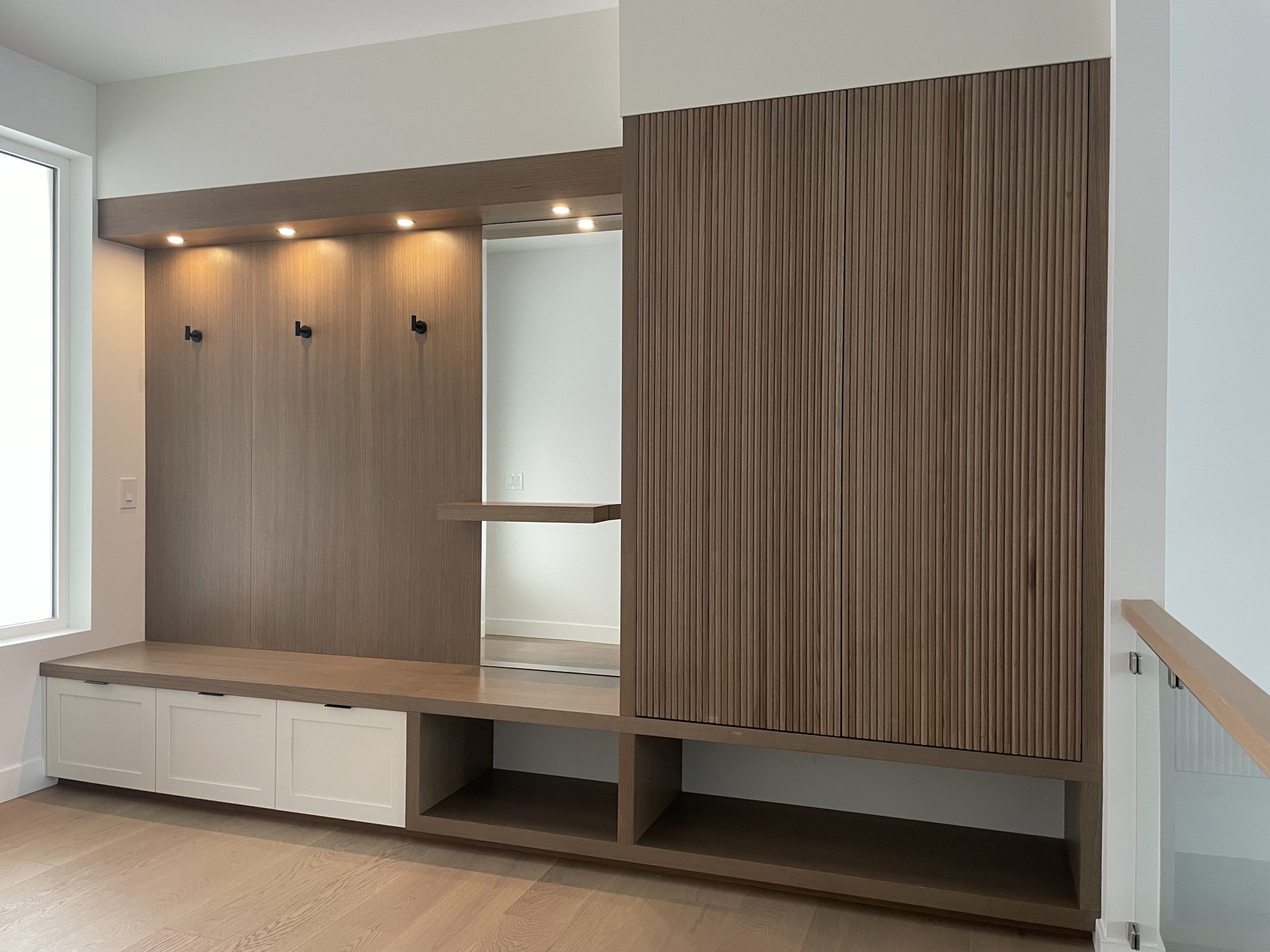
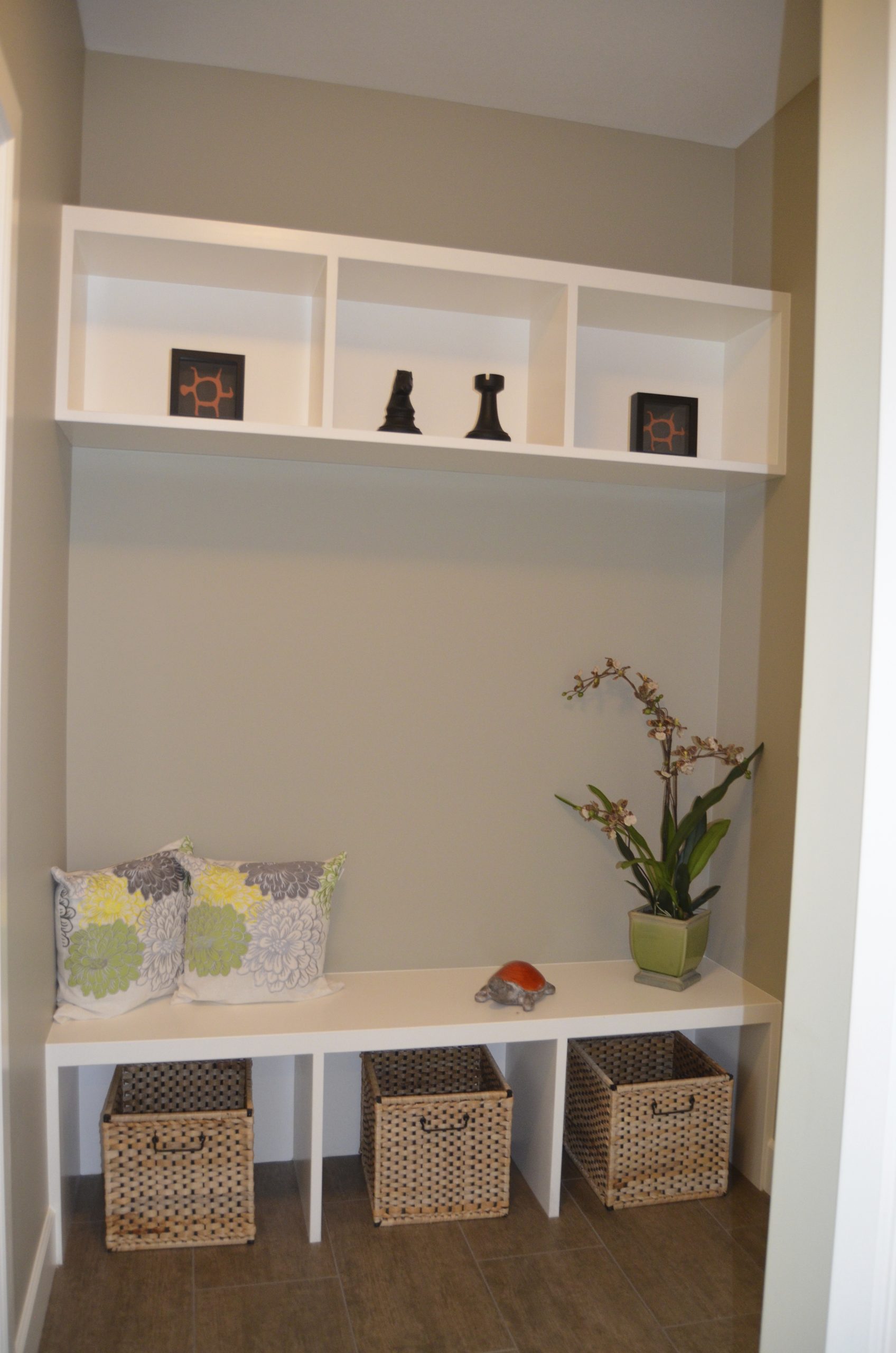
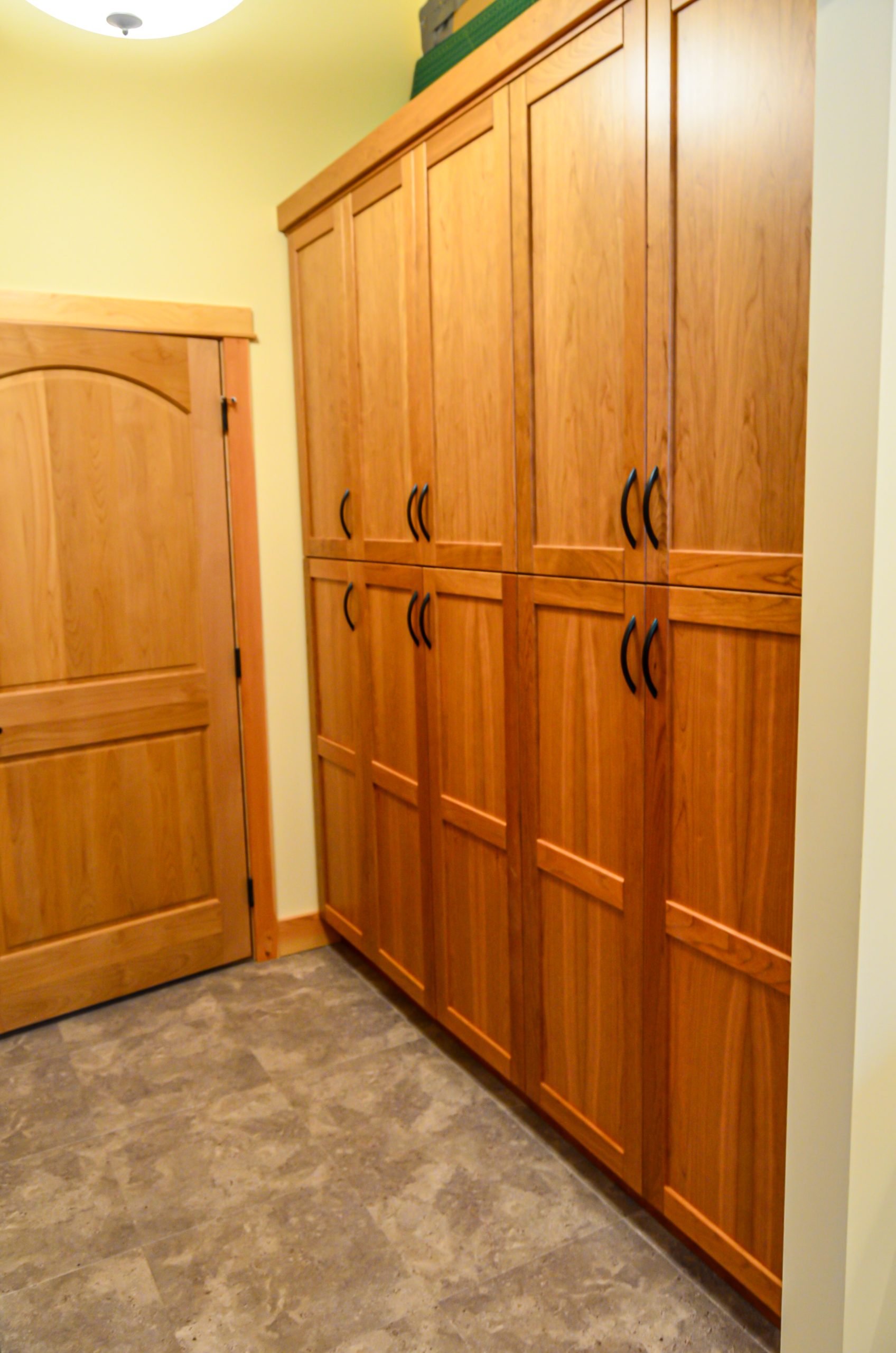
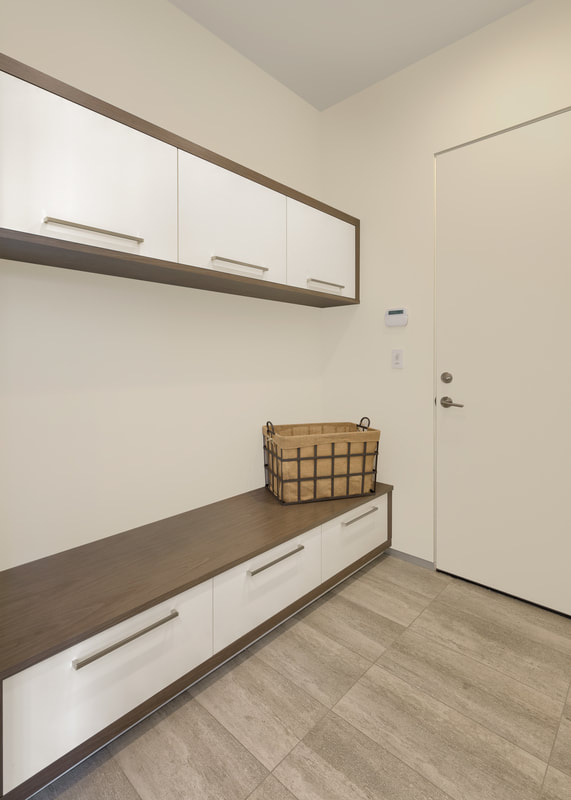
At Kekuli Bay Cabinetry, we design entryway cabinets around the dimensions of your space and the way you use it. Instead of working with standard cabinet sizes, we can tailor the layout, storage, finishes, and details to suit your home. Whether you need a compact entry way cabinet for a smaller entrance or full-height custom cabinetry with drawers, shelving, hooks, and bench seating, each design is planned to make better use of the available space.
Every entrance has its own layout and storage challenges. Some homeowners need a compact cabinet for shoes and everyday essentials, while others want a larger built-in with space for coats, bags, seasonal items, and seating.
Explore our recent custom entry cabinet projects to see how cabinetry can be designed around different spaces, storage needs, and interior styles. Each project is created to make the entrance more practical while keeping the cabinetry connected to the rest of the home.
An entryway has a simple job, it helps you get in and out of the house without creating a pile of coats, shoes, bags, and smaller items by the door. The best entry cabinet starts with those everyday habits rather than with a standard cabinet layout.
If shoes tend to collect near the entrance, we can plan dedicated lower storage or drawers. If coats, backpacks, and handbags need to stay within reach, open hooks or taller cabinet sections may make more sense. A bench can give you a practical place to sit while putting on shoes, while upper cabinets can keep seasonal items out of the way until you need them.
For families, the layout can also create a designated place for each person. Separate hooks, cubbies, or storage sections help keep belongings organized without making the entrance feel busy. In a more formal foyer, the same cabinetry can take a cleaner approach with closed doors and concealed storage.
Not every entrance has a long, open wall to work with. Narrow hallways, corners, windows, doors, and limited floor space can all affect where cabinetry can go and how deep it should be.
Custom cabinetry gives you more freedom to work around those constraints. A shallow cabinet can add useful storage without making a tight entry feel crowded, while taller cabinetry can make better use of vertical space. In other homes, the best solution may be to fit storage around an existing window, doorway, or architectural detail.
We consider how doors open, where people naturally walk, and which items need to stay easy to reach. That way, the entry cabinet fits the room properly instead of making the space harder to use.
One of the biggest design decisions is how much of your entryway storage you want to see. Open storage keeps everyday items easy to grab, while closed cabinetry creates a calmer look by keeping coats, shoes, and bags out of sight.
A balanced design often combines both:
If your entrance also functions as a mudroom, the cabinetry can be designed to handle heavier everyday use, with more room for footwear, outdoor clothing, backpacks, and seasonal gear.
Your entryway may not be the largest room in your home, but small design decisions can make a noticeable difference to how it works. A place to sit, somewhere to put your shoes, a drawer for keys, or enough closed storage for coats can make coming and going feel much more organized.
Kekuli Bay Cabinetry can help you turn those practical needs into cabinetry that also suits the character of your home. The colours, door styles, hardware, and finishes can be coordinated with nearby spaces or with other custom cabinetry throughout your home, so the entrance feels considered rather than separate.
Bring us your ideas, your storage challenges, or simply the space you want to improve. Our Design Team can help you work out what belongs in your entryway and design a solution around it.
A custom entry cabinet is designed specifically for the dimensions and storage needs of your entrance. It can combine features such as coat storage, shoe storage, drawers, hooks, shelving, or bench seating within one built-in design. Unlike freestanding furniture, the cabinetry can be planned around the layout of the room and coordinated with the finishes elsewhere in your home.
That depends on what tends to collect near your door. Many homeowners include a mix of shoe storage, coat hooks, drawers for smaller items, closed cabinets, open cubbies, and bench seating. The best combination is the one that matches your household’s routines and keeps frequently used items easy to reach.
Yes. A built-in bench can be incorporated into the cabinetry to create a practical place to sit while putting on or taking off shoes. The space below or beside the bench can also be used for drawers, shoe storage, open cubbies, or closed cabinets, depending on the layout of your entryway.
An entryway is generally the area where you enter the home, while a mudroom is typically a more functional space designed to handle shoes, coats, outdoor clothing, and other everyday gear. The two can overlap, and custom cabinetry can be designed to suit either type of space.
Yes. Door styles, colours, wood finishes, hardware, and other details can be selected to complement cabinetry in nearby rooms. The entryway does not need to match everything exactly, but carrying certain materials or design details through the home can create a more connected look.